Follow the hedging pressure as it builds.
What option traders are buying and selling, turned into the pressure dealers have to hedge: cumulative delta flow against price, where each ticker's flow sits in its range, dealer greek orderflow, and every index print scored for how deliberate it looks.
Screenshots: GWT V2 1.0.3 on simulated market data.
Options Flow Tape
Every index print, scored 0 to 100.
Every SPX, NDX and QQQ options print with its contract, size, premium, side and tags, plus a score for how much it looks like deliberate, aggressive, opening positioning rather than hedging, closing or retail noise.
- Watch presets: Everything, Big $, Informed, 0DTE or Sweeps, sorted by newest or top score.
- Sweep, block, spread, cross and retail tags on every print.
- Flow Pulse: a rolling 15-minute option volume imbalance with the dealer-gamma regime shaded behind it.
- Hover any score to see exactly which factors raised or lowered it.
How traders use itFilter to high scores during a fast tape, then check whether the strongest prints line up with the direction of the flow and the gamma regime.
Read the Options Flow Tape deep dive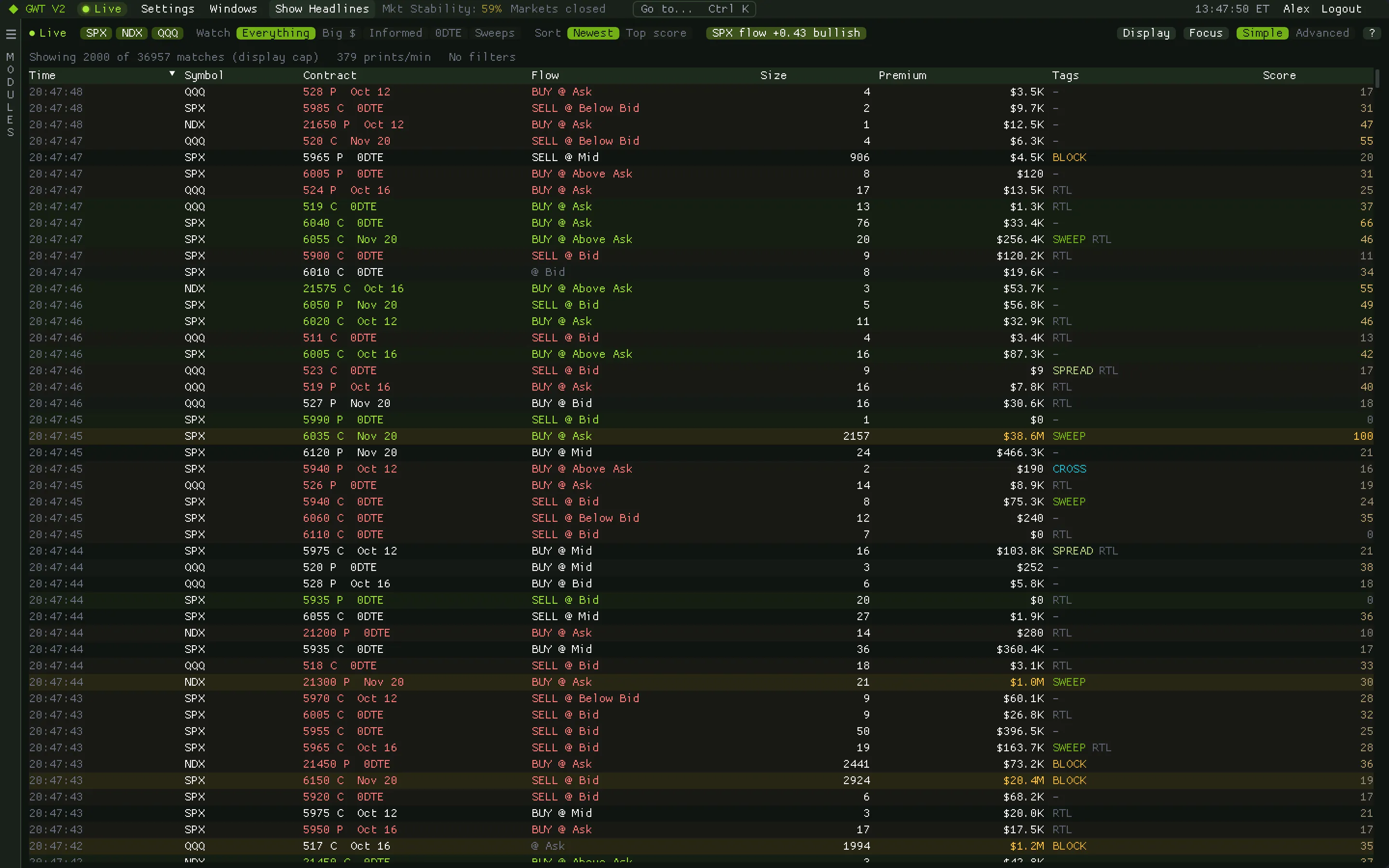
Options Flow Chart
Price against the pressure from options activity.
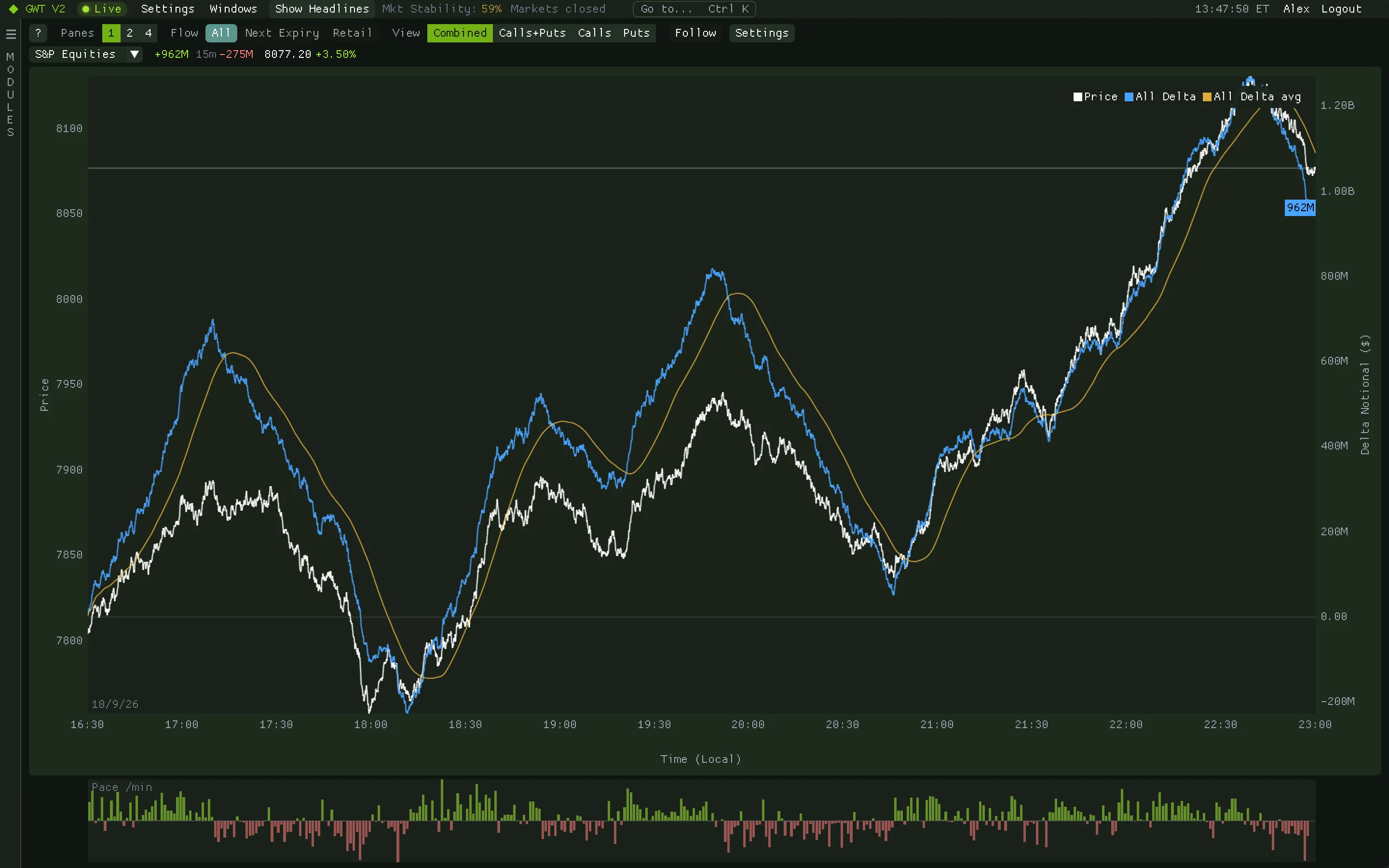
A session chart of the underlying against cumulative delta notional from options trades. Above zero, the session's flow is net supportive; below, net opposing. The slope tells you whether the push is building or fading.
- Up to four panes: S&P 500 equities, SPX, QQQ and Nasdaq, with linked time axes.
- All, next-expiry and retail-tagged buckets, as one combined line or split into calls and puts.
- Flow alert markers on the timeline, a moving average, per-minute pace bars and shading to zero.
How traders use itIf flow rises and price follows, the market is converting pressure into movement. If flow rises and price stalls, the move may be blocked or late.
Options Flow Range
Who is having an unusual day?
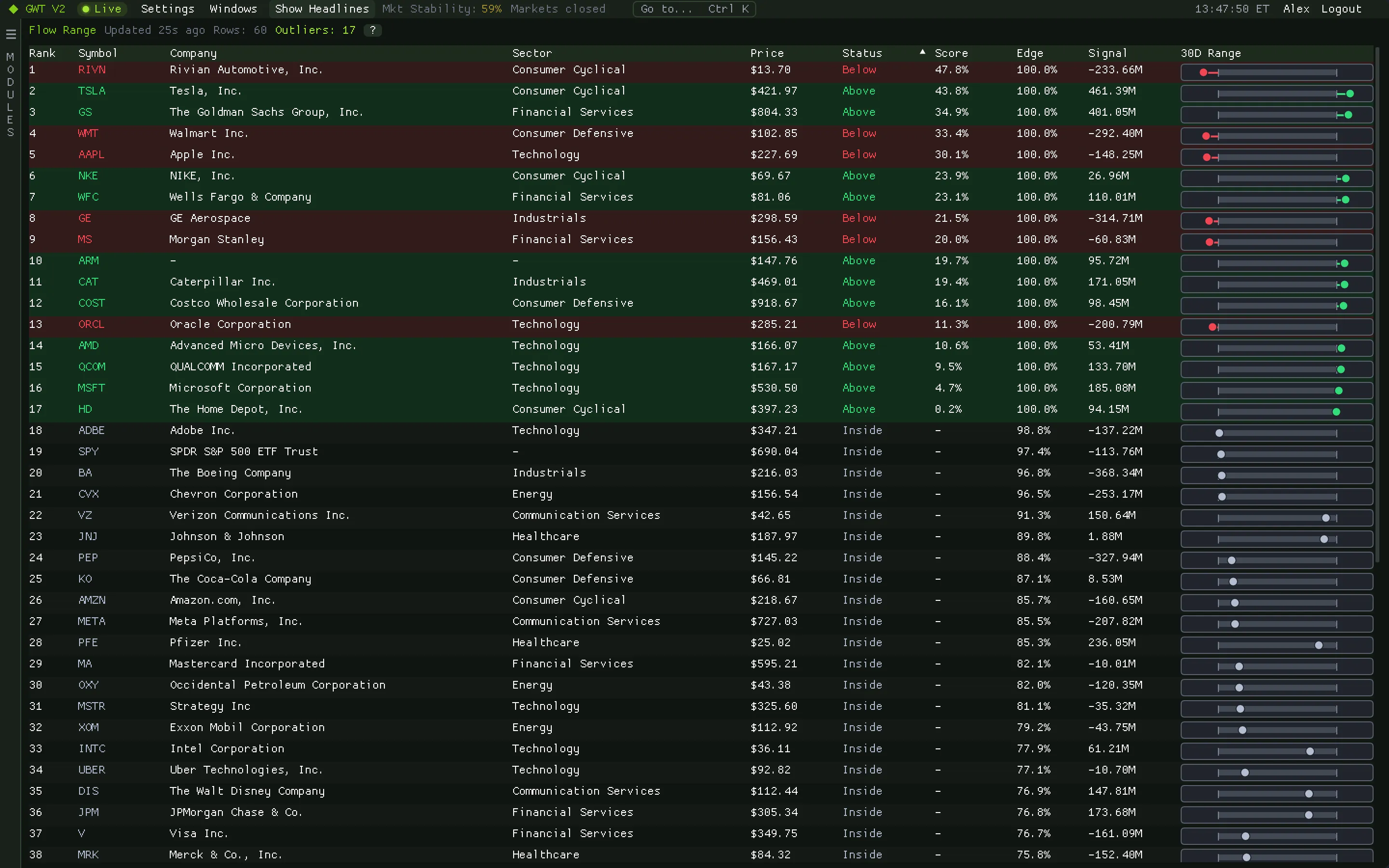
A table of tickers ranked by where today's options flow sits inside its own 30-day range. Each row draws the 30-day band as a pill and today's reading as a dot, so a breakout above or below the usual range stands out at once.
- Every tracked ticker in one ranked table, refreshed through the session.
- Outliers flagged when today's flow breaks out of its band.
- Flow alerts on notable surges in S&P 500 stocks, also marked on the Options Flow Chart.
How traders use itScan it mid-morning for names whose flow is far outside their normal range, then open them in the chart to see whether price is following.
GEX Orderflow
Dealer greeks as a running tape.
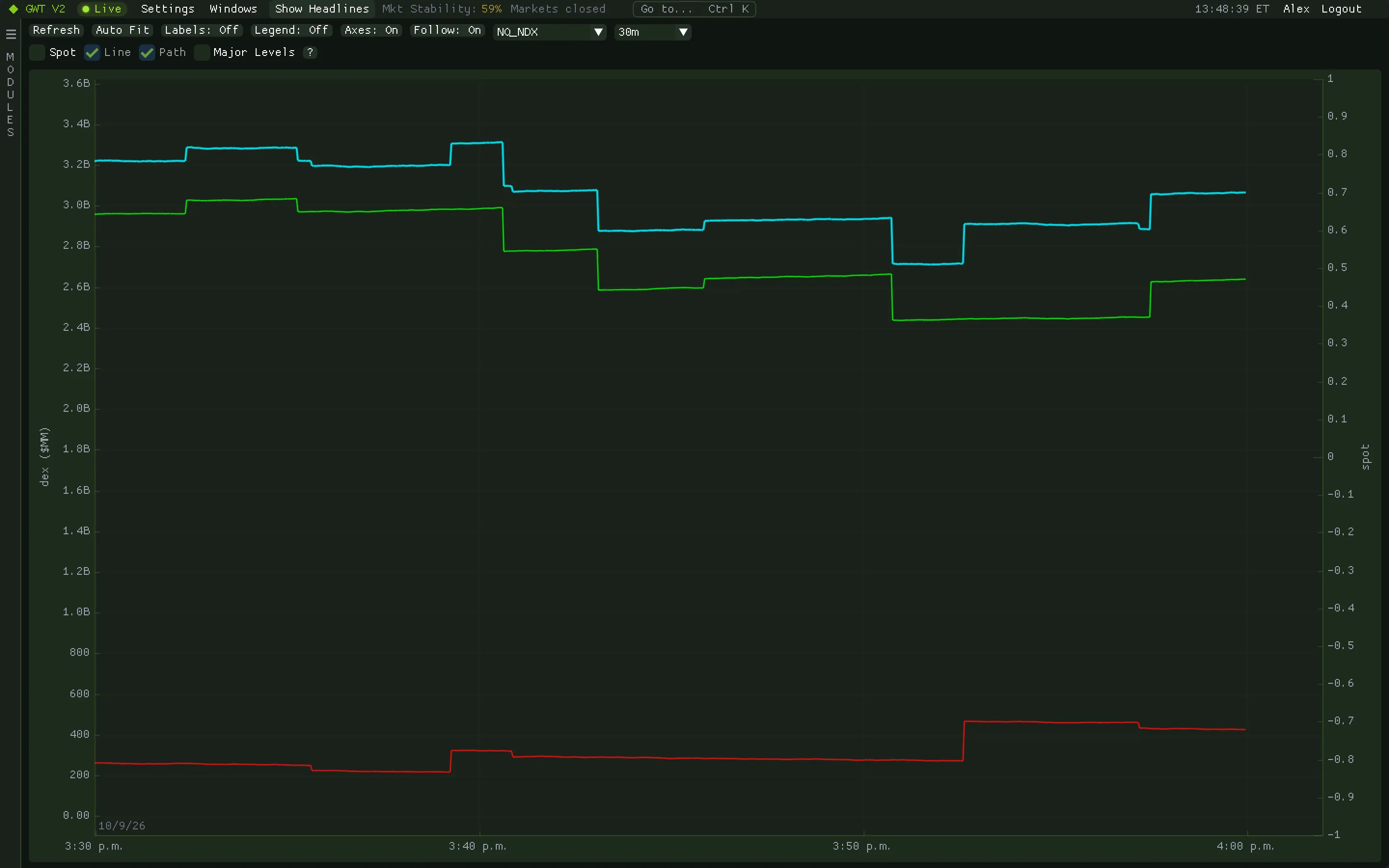
Customer options flow across the whole chain, classified as bought or sold and weighted by its greeks, plotted through the session rather than as a per-strike snapshot. Five views: Aggregate DEX, Net GEX, Net Convexity, Convexity Orderflow and GEX Orderflow.
- Aggregate DEX: the net delta customers have added today, split into call and put lines.
- Net Convexity: gamma-weighted customer flow per 1% move, a gauge of how whippy or smooth the day may be.
- Convexity and GEX orderflow side by side, for reversal and continuation reads.
How traders use itThe help in each view explains the common readings, such as a range day when call and put delta pull in opposite directions, or a trend day when both lines run the same way.
Keep exploring
Related modules
Ready when the open is
Put gamma, flow and liquidity on one screen.
Get your access token, download the app for your Mac or PC and paste the token at sign-in. It takes about two minutes.