The top-down NQ read, ready before the open.
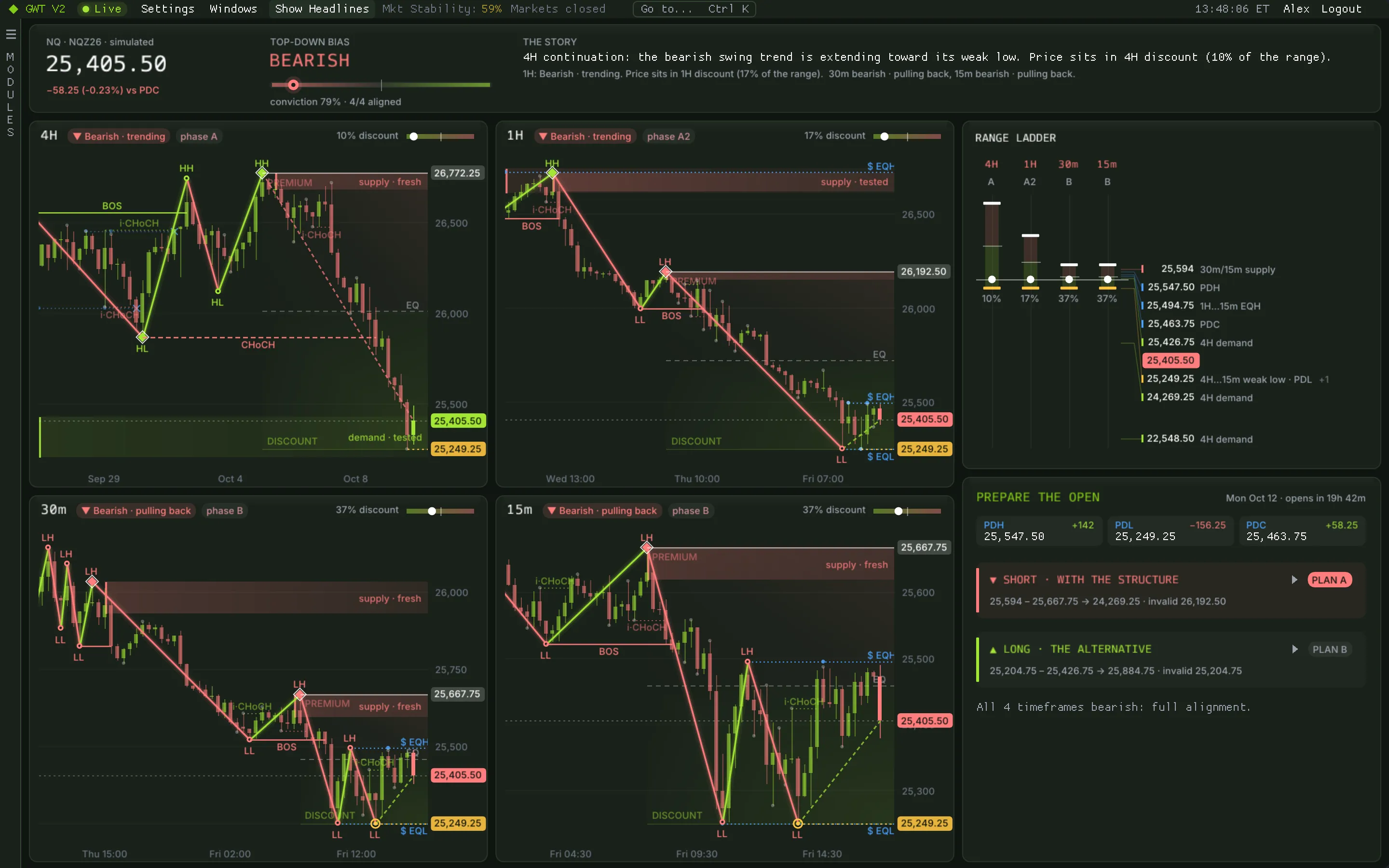
Market Structure does the multi-timeframe homework on NQ futures for you: it marks swings, breaks of structure and changes of character on four timeframes, finds the dealing range and the zones that caused each break, and turns it into a bias and a plan for each side.
Screenshots: GWT V2 1.0.3 on simulated market data.
What it marks
The structure a discretionary trader draws by hand.
Swings
Higher highs, higher lows, lower highs and lower lows, with protected and weak extremes.
Breaks
Breaks of structure and changes of character, with the zone that caused each break.
Dealing range
The active range, its equilibrium, and whether price sits in premium or discount.
Liquidity
Equal highs and lows and the session levels: prior-day high, low and close.
Bias and story
One bias, four timeframes, in plain words.
The header sums it up: the top-down bias, its conviction and how many timeframes agree. Beside it, a short story says what each timeframe is doing, for example a 4-hour trend extending toward its weak low while the 30-minute pulls back.
- Each chart is labelled with its trend and phase.
- The range ladder lines up the nearest levels from every timeframe on one scale.
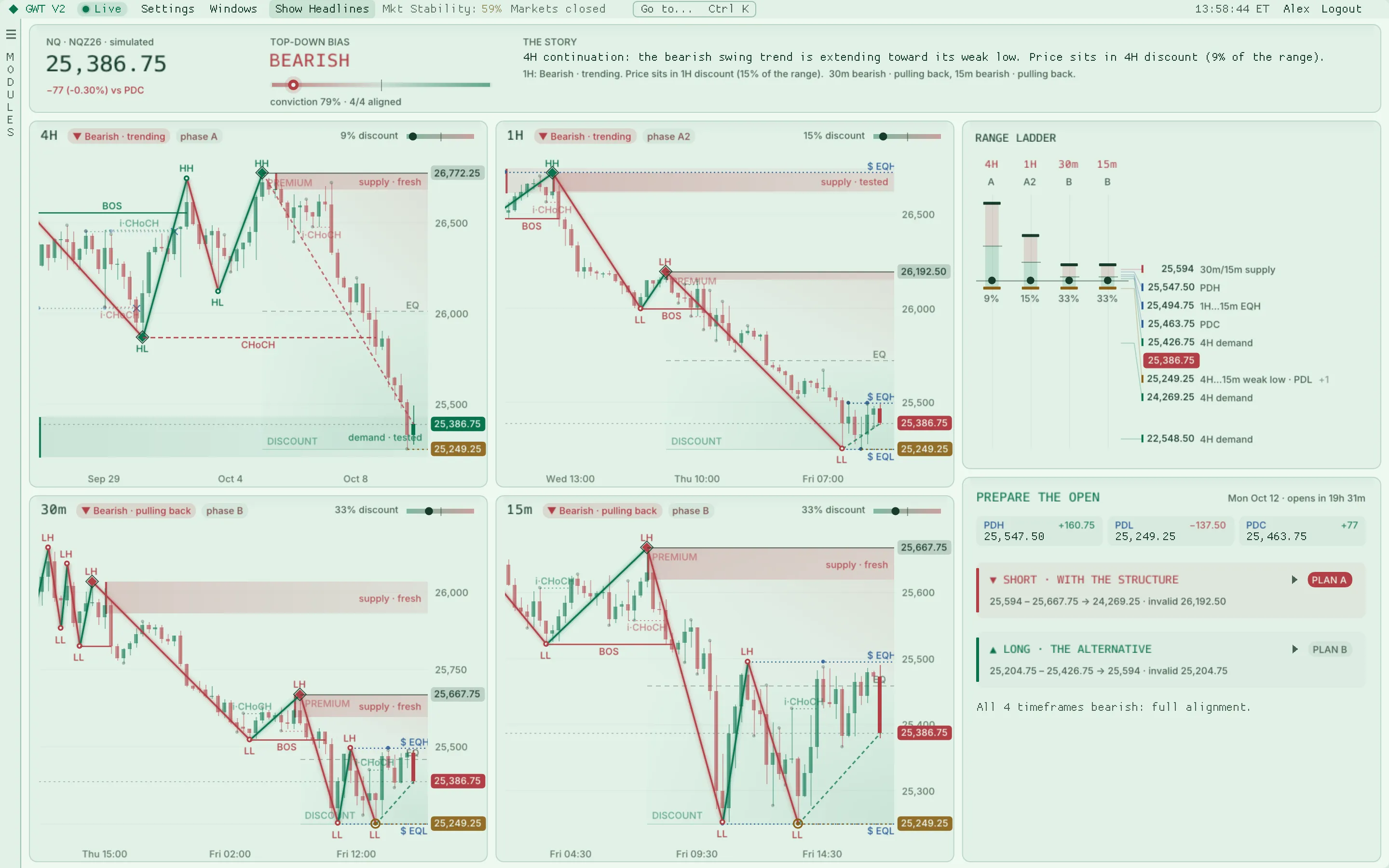
- Light and dark themes, like everything else in the app.
Prepare the open
A plan with the structure, and one against it.
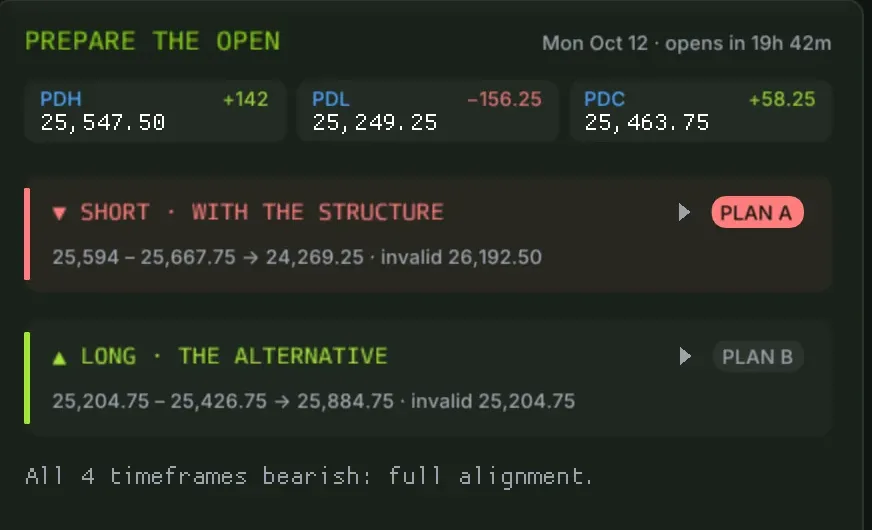
Before the cash open the card lays out two scenarios: the trade with the structure and the alternative, each with its path through the levels and the price that would invalidate it, plus the prior-day high, low and close.
- Plan A follows the structure; plan B is the alternative if it fails.
- Every plan has a clear invalidation level.
- Updates as new bars close, so the plan stays current through the session.
How traders use itDecide before the bell which plan you would take, and what would make you stand aside.
Keep exploring
Related modules
Ready when the open is
Put gamma, flow and liquidity on one screen.
Get your access token, download the app for your Mac or PC and paste the token at sign-in. It takes about two minutes.